Supplements for PMS
The 5 days when nothing helps.Or at least that's what you think.
Biscuits at 10 pm. Headache in the morning. Irritability for no reason. You're not crazy, your progesterone is falling and your cortisol is climbing. And most "supplements for women" don't address either.
Available today, for those days
Vitamin B6 contributes to the regulation of hormonal activity — it is in the multivitamin and in the magnesium. The doses are stated on every label. Others make them, we sell them.
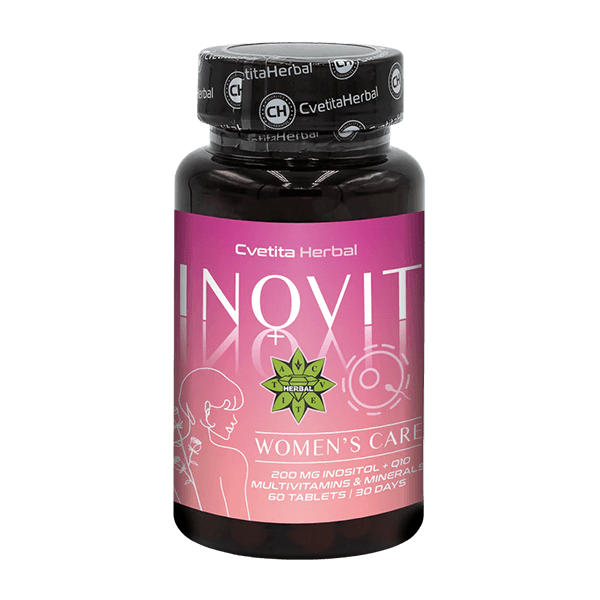 Inovit 365 Multivitamins and MineralsTwelve ingredients in two tablets, 60 tablets for 30 days · The box reads Иновит 36534,99 €
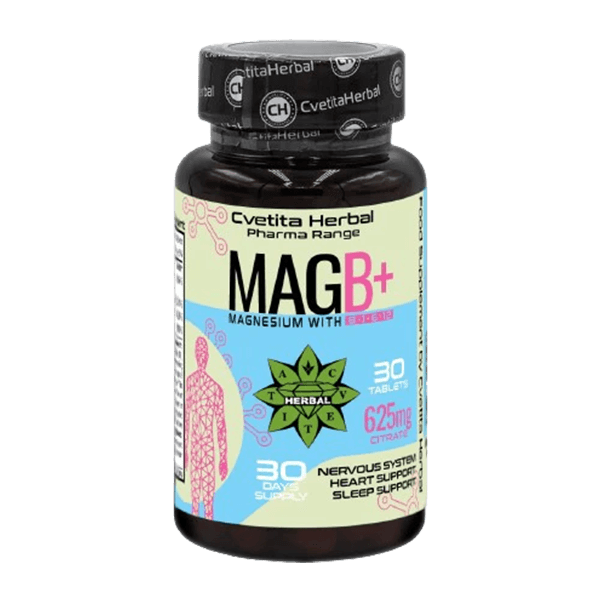 Magnesium with Vitamin B Complex625 mg of magnesium citrate with B1, B6 and B12 in one evening tablet20,49 €
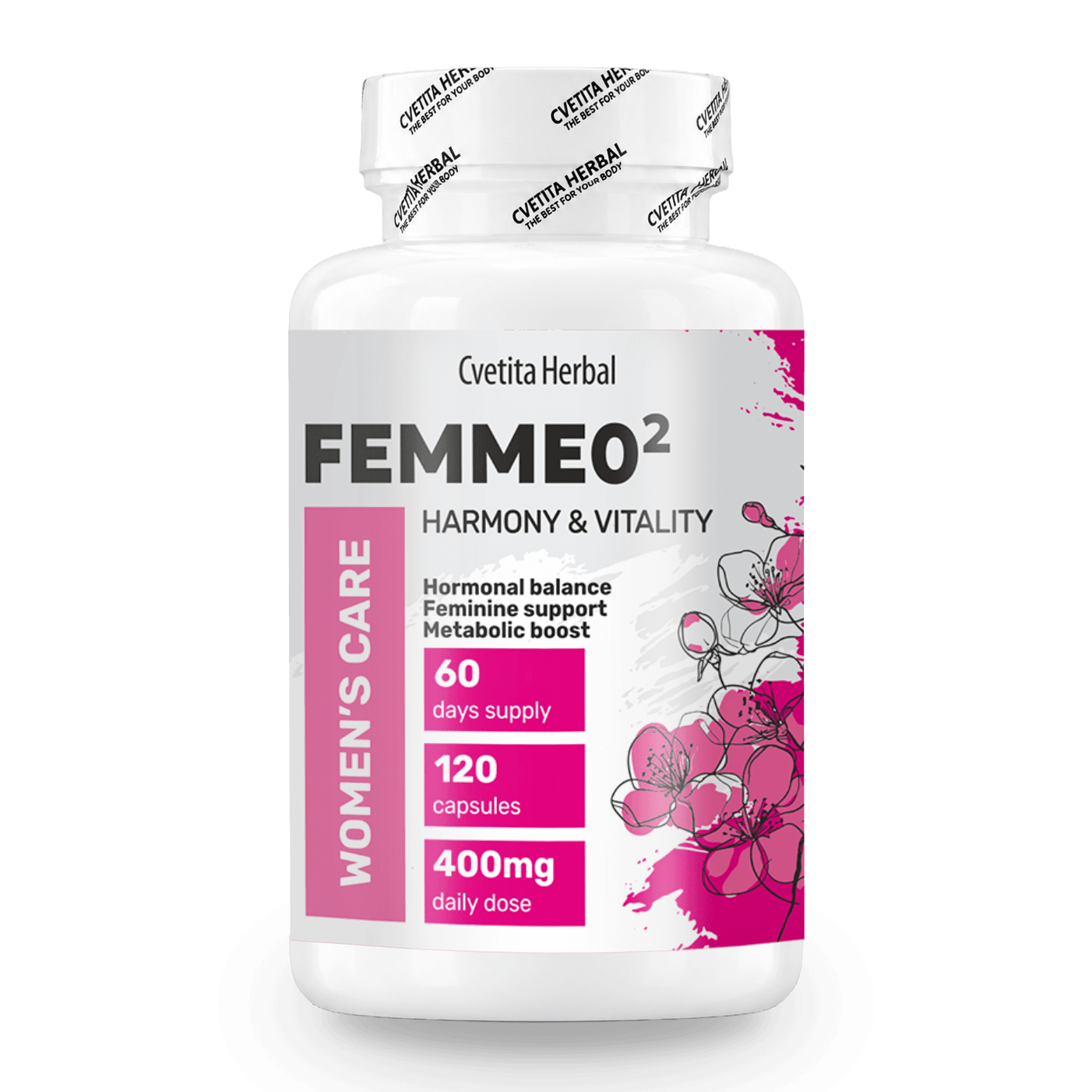 FEMME O2 · Tribulus, Maca, Siberian Ginseng280 mg tribulus, 80 mg maca and 40 mg Siberian ginseng per capsule · The box reads FEMME O237,99 €
What actually happens before your cycle
In the last two weeks of the cycle (days ~15-28), progesterone rises and then falls sharply. The body reacts: holds water, raises inflammatory markers, shifts serotonin activity.
Add chronic stress on top, and cortisol further suppresses progesterone. The result: cramps, bloating, insomnia, irritability, sugar cravings. Not "character". The body works this way.
Painkillers stop the pain for 4 hours. Chocolate raises serotonin for 20 minutes. Neither one reaches the cause: the cortisol that's pushing progesterone down.
Which ingredients have clinical data for PMS
Not everything on the market works. Here's what's actually been studied in women, with doses and results.
Myo-inositol, 2000 mg
Cycle and cravingsThe most common of the nine inositol isomers: about 95% of the inositol in the body is this one. In the sachet: 2000 mg, the largest single amount.
In stock today: Berberis, Inositol and Alpha-Lipoic Acid · 42,99 €
Magnesium bisglycinate, 670 mg (134 mg elemental Mg, 36.53% RDI)
Cramps and bloatingMagnesium bound to the amino acid glycine rather than oxide: the bisglycinate is gentler on the stomach. Magnesium contributes to normal muscle function and to the reduction of tiredness and fatigue. The sachet carries 670 mg.
In stock today: Magnesium with Vitamin B Complex · 20,49 €
When it helps and when it doesn't
Corti-Glow may help if:
- —Your PMS is mild to moderate (cramps, bloating, irritability)
- —Stress makes the symptoms worse (which it does for most women)
- —You want an alternative to daily painkillers
- —You have sleep issues around your cycle
Corti-Glow won't replace a doctor if:
- —You have endometriosis or PMDD (severe form of PMS)
- —The pain is disabling, you can't work or get out of bed
- —Your symptoms are new or suddenly changed
- —You're on hormone therapy or antidepressants
Supplements are not medicine and do not replace medical advice.
Frequently asked questions
How long does it take to feel the effect of PMS supplements?+
Can I take PMS supplements alongside painkillers?+
Does ashwagandha help with PMS?+
What is myo-inositol and why is it important for PMS?+
Is Corti-Glow only for PMS?+
The evening can be different.
Magnesium, ashwagandha and collagen are in stock today. Our own Corti-Glow sachet is still in production.
See what is in stock